



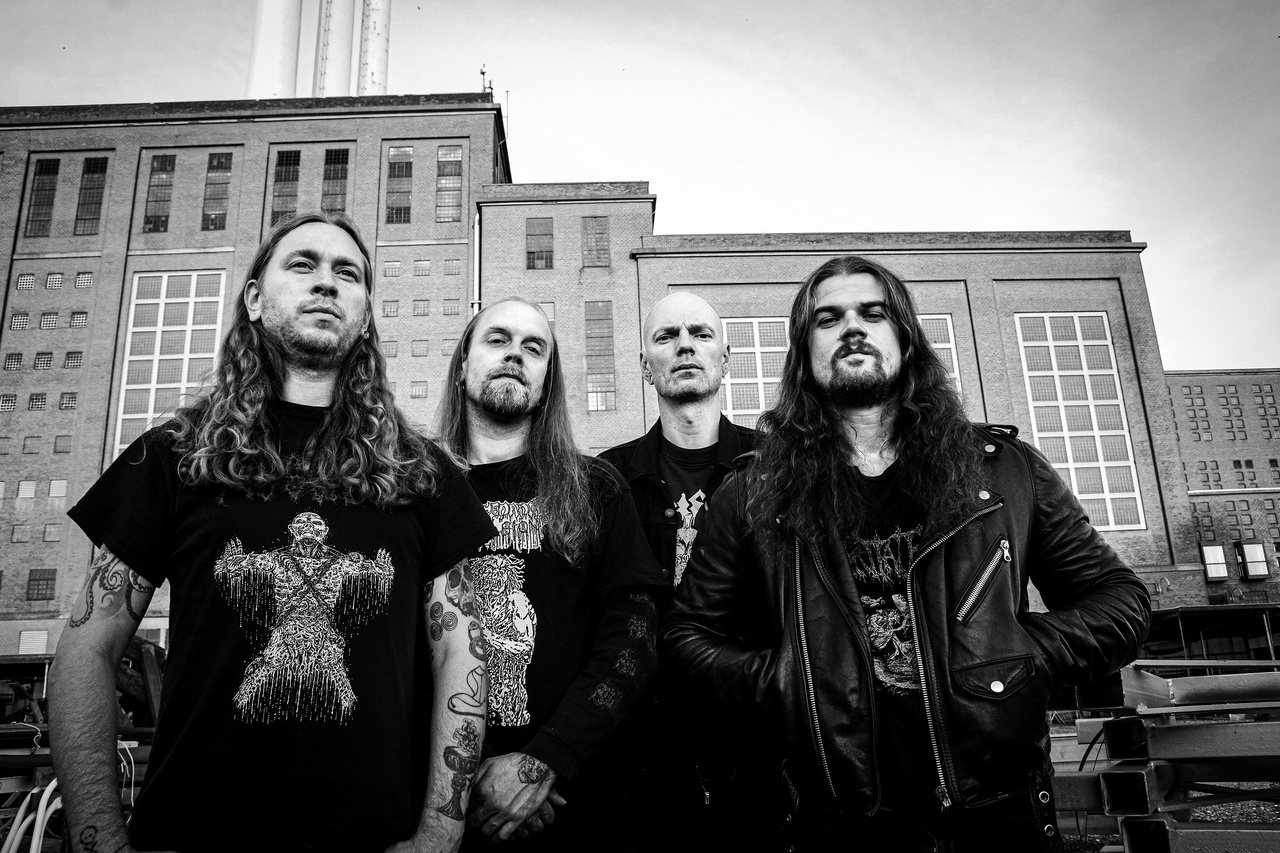
Με μία ματιά...
Phrenelith take the An Club stage on October 29th, 2026, closing a plan that had been floating around for more than a decade. Simon Daniel, vocals and guitar for the Danish band, describes how a small circle of Copenhagen musicians built an entire death metal scene without all of them landing on the same sound.
- “Chrysopoeia” was written right after the debut and needed eight years of live shows before it found a place on a record.
- Phrenelith play their first ever show on a Greek stage at An Club in Exarcheia on October 29th, 2026, with Rapture and Casket Dweller opening the night.
- The band has three albums across eight years, from “Desolate Endscape” recorded at Ballade studio in April 2016 to “Ashen Womb” in February 2025, with “Chimaera” on Nuclear Winter Records in between.
Phrenelith is coming to Athens for the first time. On October 29th they take the stage at An Club in Exarcheia, with Rapture and Casket Dweller opening the night, closing a conversation that had been going on for almost as long as the band itself. Twelve years after their first steps in Copenhagen, the band behind “Desolate Endscape” finally sets foot on a Greek stage. Around them sits a city that produced Undergang, Hyperdontia, Sulphurous and Deiquisitor, with the same faces moving from one band to the next.
We spoke with Simon Daniel about the days at Ballade that produced the debut, the road that took him from Hesiod to the monsters of Greek mythology, the collaboration with Timo Ketola shortly before he passed away, “Ashen Womb”, and a song that waited eight years to make it onto a record. He also explains something only a Greek reader notices, which is why their tracklist reads like a vocabulary test.
Welcome to DEPART. On October 29th you set foot on a Greek stage for the first time, at An Club in Exarcheia, a venue that has been feeding the Athens underground for four decades, with Rapture and Casket Dweller opening the night. What do you actually know about the scene that is about to welcome you, what finally made this date happen after more than ten years as a band, and how do you build a setlist when you are introducing yourselves from scratch to a crowd that has never seen you in a show?
Simon Daniel (Phrenelith): Hello and thanks! I will admit I’m not personally that familiar with the scene in Athens, as I have never been to mainland Greece. We are very excited to play and look forward to getting familiar with the scene, though. There had been talk of us playing in Greece for nearly as long as the band had existed. One day the stars aligned in such a way that it was possible for us to do it.
About our setlist, it will contain material from all eras of the band, and even some new and unrecorded songs. So, in that sense I think the show will be both a good introduction to us, and something that will please long-term fans of us.
Phrenelith started in 2013, inside a Copenhagen that went on to produce Undergang, Hyperdontia, Sulphurous, Chaotian and Deiquisitor, with members circulating between all of them. What did that city actually look like back when you began, how does it work in practice in a place that size, meaning how rehearsal rooms and show dates get shared, and what keeps all those bands from ending up sounding like each other?
When we started Phrenelith the music scene in Copenhagen was vastly different and death metal was in a very different place. It’s hard to get into all the reasons why in such a short amount of space. But the main thing was that there was a lot less interest in death metal, and that it seemed less “marketable” for a lack of better words.

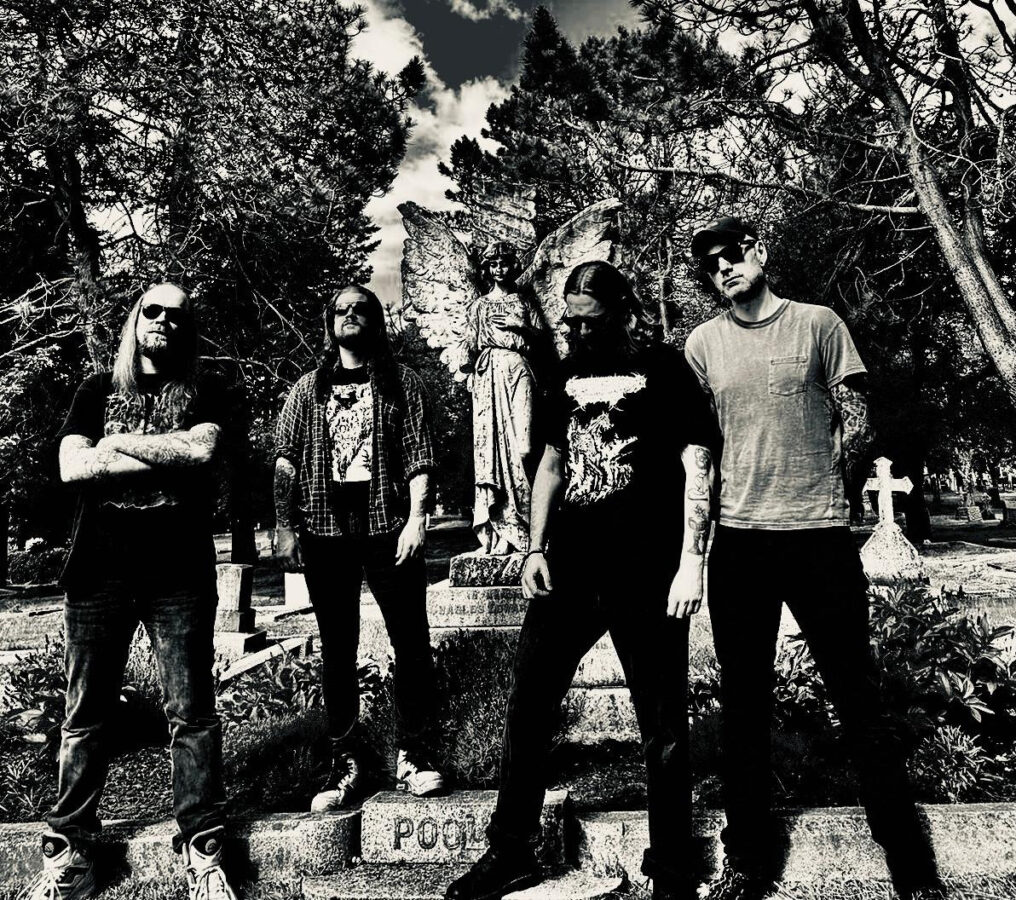
Things were starting to happen, not least by the effort of David and Undergang taking the initiative to make things happen, and we were a tight knit group of people that all had the same kind of vision, and wanted to create something together, like setting up shows and starting new bands etc. Most of the bands you mentioned were friends that shared rehearsal rooms together at one point or another. So, regarding shows and how bands started, it just came about in a very natural way.
The answer to why we don’t all sound alike is probably because all the bands have different creative forces that write the songs for that band. I’m glad there isn’t a particular “Copenhagen sound”, as that would be very dull and restricting to me, personally.
Back in April 2016 you spent five days at Ballade with Lasse and came out with “Desolate Endscape”, a debut that a large part of your audience still measures everything else against. What a way to introduce yourself. What was the plan walking into those sessions, how much of that record's character came from choices and how much from the clock running out, and what does it do to a young band when its first album becomes the benchmark overnight?
The way I remember it, we didn’t really have a plan or a certain approach in mind when we entered the studio. We had rehearsed quite a lot leading up to the recording, somehow, we had more time back then to rehearse. So, I think we were in pretty good shape, and generally just had the idea that our material was strong enough to be recorded in a real studio.
There wasn’t really any pressure in terms of our studio time running out, since everything went pretty quick. The drums were recorded in one day, and I think both rhythm guitars were recorded on the same day. I feel like I still had plenty of time to experiment with some things, like layering multiple samples and different tracks of acoustic guitars.
About the last part of your question, the success and attention the debut album got took us all completely by surprise. Again, I felt the songs had something special and that the material was strong, but oftentimes that’s not enough to grab people’s attention. Also, the band was very much at its beginning, and I ultimately think it was a case of us playing the music that we enjoyed, and then blindly stumbling into something that resonated with people.
Four years later came “Chimaera”, with lyrics pulled from the darker end of Greek mythology, and the record landed on a Greek label, Nuclear Winter, which is a strange kind of symmetry. Most bands that reach for those myths end up with gods and heroes. You seem to have gone looking for the rot underneath, the monsters and the punishments and the bodies that get rearranged. Where did you read those stories, which specific episode struck you as repulsive enough to carry a whole album, and what does a Chimaera mean to you beyond the obvious image of parts that should never have been stitched together?
Work on “Chimaera” started almost immediately after we finished up “Desolate Endscape”, and therefore it’s been a while now, so it’s hard to remember what put me in the direction of Greek mythology for the album. Just a lifelong interest, I suppose, having a basic knowledge of the myths and a desire to learn more. I remember being instantly intrigued when I started reading about Typhon and Echidna as the progenitors of all the outcasts and miscreants, since it was a part of the mythology I hadn’t heard about before.
The two main sources of inspiration came from the collection Theogony by the ancient Greek poet Hesiod, and Dante’s Divine Comedy and its descriptions of the five rivers of the underworld. An anti-heroic or anti-homeric sentiment also came from reading The Odyssey and The Iliad throughout my life. So basic stuff, as I don’t claim to be an expert on the subject.
To put it briefly, the Chimaera as a symbol was very interesting to me. There’s a certain melancholy about it, an imperfect and misshapen creature forced to live on the fringes of the world, troglodytes living far away from the sun, and the light of the gods. The titans’ yearning for revenge was also something I remember resonating with me.
The cover of “Chimaera” was painted by Timo Ketola, who put his hand on some of the most recognisable records this genre has, and who passed away in 2020, which makes this one of the last things he gave us. Working with him was clearly more than commissioning a piece of art. How did the collaboration go, what exactly did you send him as material or as an idea, what came back that you had not seen coming, and what would you want people who only know the name from album sleeves to understand about him as an artist and as a person?
Beyond having immense talent, Timo Ketola was also incredibly easy to work with. I sent him the lyrics, and a collection of various illustrations I thought was fitting. I also referenced some of his earlier work to convey what I wanted. From there he went into subject matter himself and took the initiative to find things to draw upon.

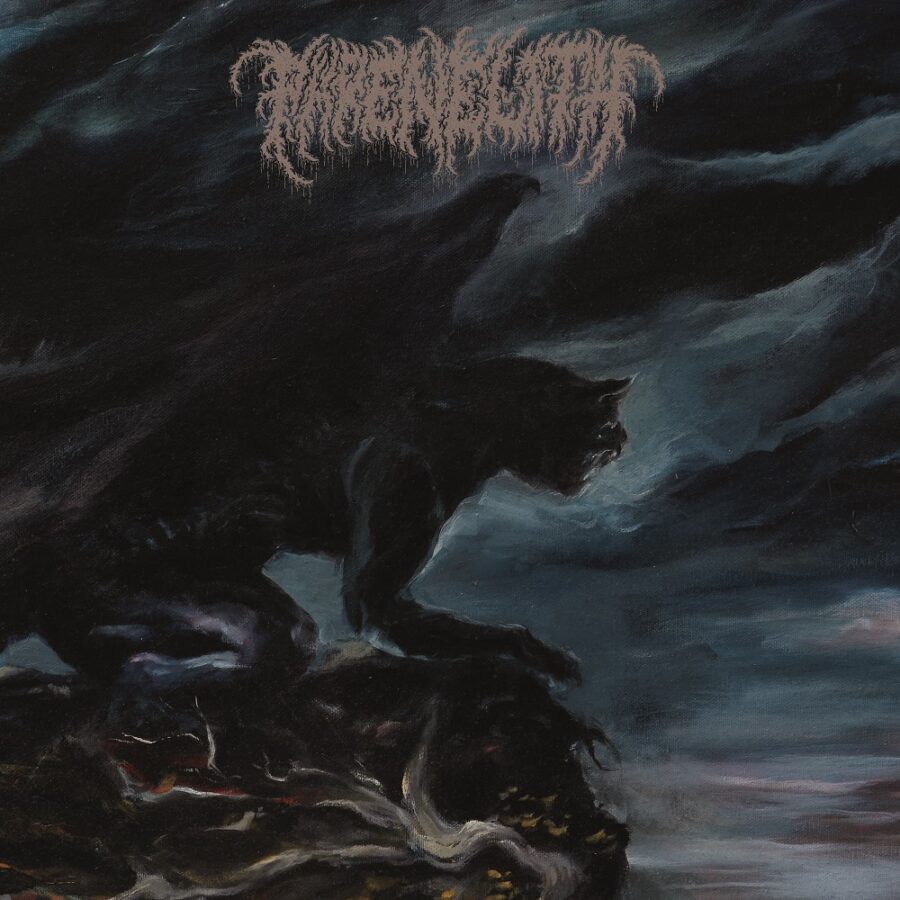
I’m usually very particular about what I want from an artist, since I normally have a very strong idea about how I want the artwork to look. I was a little more hands-off in the process with Ketola, letting him also present ideas, so in that regard I had a lot of trust in him coming up with something compelling.
Sketches were worked out in a very natural way through casual conversation. It was a long process where we went through some ideas that ultimately didn’t fit the band, but that contributed to making the result that much greater. Him writing in Swedish and me answering in Danish also gave everything a different familiarity that I don’t think would have been there if we were writing each other in English. There’s a lot of good memories from working with him, just talking about different things with him and sharing musical recommendations etc.
“Ashen Womb” arrived in February 2025, three and a half years after “Chimaera” and eight after the debut, and you described it as pulling back toward the “raw spontaneity and unrestrained immediacy” of the early material without abandoning what the second record opened up. A band changes a lot in eight years, so what exactly did you have to unlearn to get back to that immediacy, what from “Chimaera” was worth carrying forward, and were there moments where chasing both at once left a song stuck in the middle with nowhere to go?
Simon Daniel (Phrenelith): I think, initially, we had the impression that “Ashen Womb” would be a bigger departure from our musical essence, but in my opinion the album ended up being a clear continuation of the two records preceding it, and sound wise it kept a lot of our core sound.
I agree that a band changes a lot in eight years, anything else would be a failure, personally, and I definitely think we changed in many ways at that point, which is sort of an essential characteristic of Phrenelith. So, I don’t think there was really any struggle between the different approaches to the record, or any musical identity crisis. I think we ended up conveying almost exactly what we wanted on the record.
Alchemists used the word chrysopoeia for the transmutation of base metal into gold, and you spent eight years doing something close to that with the song itself, playing it live, reshaping it, waiting. What kept it out of the first two records, was there ever a version of “Chimaera” or the debut where it almost made the cut, and did the eight-year delay end up serving the song or did you lose something by waiting that long?
As I remember it, “Chrysopoeia” was the first song that I wrote after we finished up the recording of the debut album, so it was never considered for “Desolate Endscape”. What kept it out of the “Chimaera” album was the fact that that album is in a weird, special tuning, so it wasn’t practical to transcribe “Chrysopoeia” in a way that would fit that album. Also, the song’s lyrics didn’t fit into the overarching narrative concept.
So, it became a song that we played live for almost a decade before recording. In an abstract way I would say that all the years the song spent gestating served the song in a positive way, but it also changed little by little as the years went by and thus certain parts of the song’s identity were lost.
Here is something that hits differently when you read your tracklist from Athens. “Noemata”, “Chrysopoeia”, “Lithopaedion”, even the title of your second album, all of them read like ordinary Greek words to us before they read like death metal titles, which turns your album covers into a strange kind of vocabulary test. Who in the band digs up this material, how does a word end up attached to one specific song rather than another, and is there a thread running through phenomenology, alchemy and medical pathology or are these three separate obsessions living under the same roof?
I can see why some of the titles for our songs might be jarring or even a little bland to someone from Greece. Partly, I think it all comes down to the western tradition of naming concepts from either Greek or Latin origins. All the songs mentioned refer to a specific scientific or philosophical concept, that the song either relates to directly or as a metaphor, so the titles aren’t randomly selected just because they sound pretentious.
Hard to say what unites all these song titles, except a general interest and obsession with the obscene and esoteric, that aligns with death metal music.
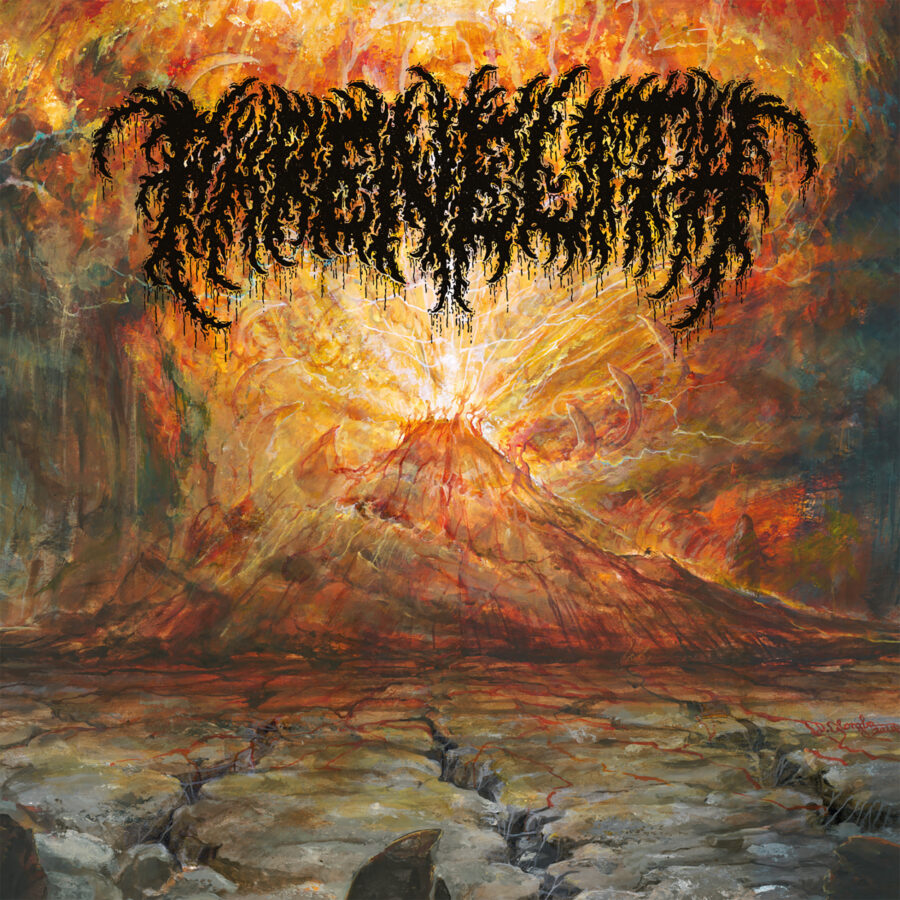
As a specific example, the title “Noemata” was chosen for the opening instrumental of the album for many reasons. There is an obvious link to Edmund Husserl and phenomenology, which I was very interested in at the time of writing the album. In connection to that I found that something meaning “conceptions” or “perceptions” was somehow very fitting for the song. I also find that the Danish translation of “Noemata” carries a sinister sub-meaning that I find hard to accurately describe in any other language. And finally, I was intrigued by the fact that “Noemata” specifically refers to an evil purpose, and Satan’s schemes in some Greek translations of the bible. So, quite a lot went into naming that short instrumental.
Thank you for the time, this was a pleasure. Last one is yours to do whatever you want with. Someone is reading this in Athens right now, maybe getting ready to see you for the first time, maybe hearing about you through this interview and deciding whether to show up at An Club. What do you want to say to them before the 29th? We will see you there.
Thanks for doing the interview! Hope your readers will find my answers interesting. I certainly enjoyed answering the questions. I look forward to having a good time in Athens. Keep your eyes peeled for a new album in 2027! (hopefully)


